
Nightguard or Botox for TMJ? How to Choose
When jaw pain, clenching, or grinding lands you in a dentist's chair, two treatments come up more than any others: a custom nightguard and therapeutic Botox. Patients often assume they have to pick one. In reality the two do different jobs, and the better question is usually not which one, but which one first, and whether you need both.
What a Nightguard Actually Does
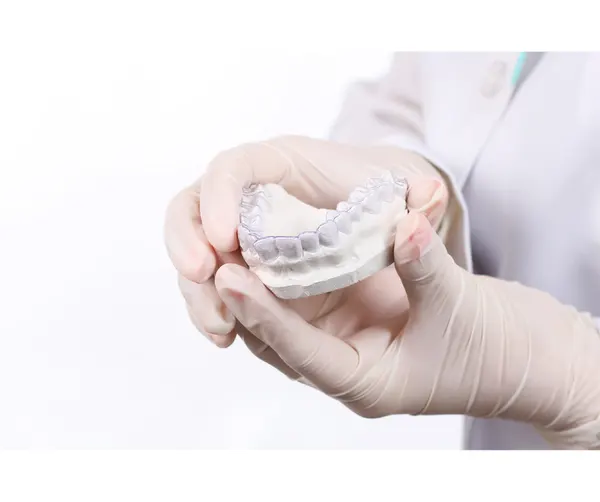
A custom nightguard is a precisely fitted appliance you wear while you sleep. It does two things. First, it puts a physical barrier between your upper and lower teeth so grinding wears the guard instead of your enamel and dental work. Second, a well-designed guard helps the jaw muscles settle into a more relaxed position overnight, which reduces tension for many people.
The strengths are real. A nightguard is non-invasive, protects your teeth directly, and for a large share of patients it is enough on its own. The limits are worth knowing too. A guard does not reduce the force your muscles generate, it just manages where that force goes. A determined clencher can still wake up sore, and a guard only works on the nights you actually wear it.
What Therapeutic Botox Actually Does
Therapeutic Botox takes the opposite approach. Instead of managing the force, it reduces it. Placed into the jaw-closing muscles, the masseter and temporalis, it lowers how hard those muscles can contract. Less clenching force means less soreness, fewer tension headaches for many patients, and less wear driving into the teeth.
Its strengths are that it targets the muscular cause directly and can help when a guard alone has not been enough. Its limits: the effect is temporary, generally lasting three to six months, so it needs to be repeated, and like any treatment it is not right for everyone. At Mercado Dental Studio it is used therapeutically, as part of a dental treatment plan, not as a cosmetic service.
Side by Side
Put simply: a nightguard protects the teeth from the consequences of grinding, while Botox reduces the muscular force that causes it. A guard is a durable, one-time investment you wear nightly. Botox is a recurring treatment that works whether or not you remember to do anything. A guard has essentially no medical contraindications. Botox has a few, which is why a health history review matters. Neither one repairs a structural joint or disc problem, which is a separate issue that needs its own diagnosis.
Why It Is Often Not Either/Or
For many patients the strongest, most durable relief comes from using both. The nightguard shields the teeth and existing dental work night after night, and the Botox turns down the muscle force behind the grinding. Each covers the other's blind spot. That is why Dr. Mercado frequently plans them together rather than treating them as competitors.
How Dr. Mercado Decides
The choice is not made from a brochure, it is made from an exam. Dr. Mercado looks at how your teeth meet, how worn they are, how the jaw joint moves, and how much of your pain is muscular versus structural. For most people, a custom nightguard is the sensible first step. When clenching is strong enough that a guard cannot keep up, therapeutic Botox is added to the plan. The plan is matched to your symptoms, and it is adjusted as they change.
If you are tired of guessing which treatment you need, the fastest way to an answer is a short evaluation. Request a consultation or call (916) 448-5458, and Dr. Mercado will tell you plainly what your jaw actually needs.
Medical disclaimer: This article is for general educational purposes only and is not a substitute for professional dental or medical advice, diagnosis, or treatment. Individual results vary, and no specific outcome is implied or guaranteed. Always consult Dr. Mercado or another qualified healthcare provider about your specific situation. If you are experiencing a dental or medical emergency, call our office or 911.